
Persephone Hadley’s Awakening
Noughts & CrossesThis flow traces Persephone Hadley’s movement from sheltered privilege toward moral independence, including her resistance to family pressure and her choice to raise her child.
increasing Bearing strength in each event
 decreasing
Bearing strength in each eventdecreasingA Protected Perspective
A Protected Perspective
Life inside privilege
Persephone Hadley begins the story with affection for Callum McGregor but little understanding of how differently the world treats him. Her family’s wealth, status, and private beach make safety and access seem normal, while Callum experiences daily reminders that he is a Nought.
She imagines that friendship can overcome the divide if the two of them simply choose one another. Callum’s warnings that they occupy different social positions sound to her like pessimism, because she has not yet had to pay the same price for crossing the boundary.
The first recognition
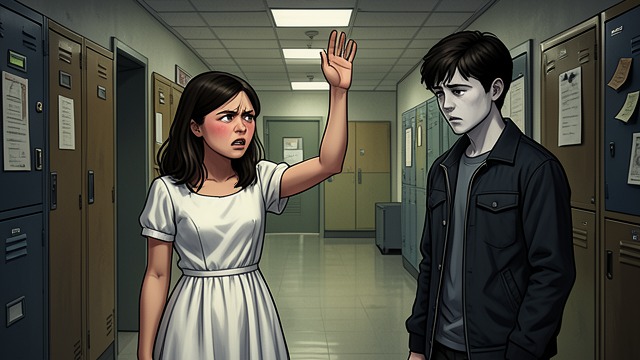
At school, Persephone’s attempt to defend Nought students ends with her using an insult that wounds Callum. The episode forces her to recognize that good intentions do not erase the harm of words or the unequal position from which she speaks.
Her awakening begins not as a completed political understanding but as a series of uncomfortable corrections. She starts to see that love for one person cannot stand in for listening to the people who face discrimination every day.
Seeing the System

Seeing the System
Learning to notice
After Callum is treated differently on the train to Celebration Park, Persephone begins observing how Noughts and Crosses move through public life. She notices who is watched, who is believed, and who can rely on institutional authority to intervene on their behalf.
These observations make inequality harder to dismiss as a collection of individual misunderstandings. She starts to understand that the everyday habits of fear and separation are shared across streets, schools, and public spaces.
Taking risks
Persephone tries to act on what she sees, including sitting with Callum at lunch despite school rules and peer pressure. Her gestures carry genuine courage, but their consequences also expose how institutions punish boundary-crossing and how Callum may experience her help as another reminder of his dependence on a Cross.
Her developing awareness is therefore uneasy rather than self-congratulatory. She learns that standing beside someone requires more than good intentions; it requires attention to how power shapes the act of helping.
Leaving Home to Recover
Leaving Home to Recover
A family in crisis
Persephone’s home becomes unstable as her parents’ marriage breaks down and her mother’s drinking worsens. Her sister Minerva Hadley offers flashes of honesty and solidarity, but neither daughter can repair the adults’ choices or the family’s emotional distance.
Persephone also begins drinking to escape fear, anger, and loneliness. Callum challenges her, making her confront the possibility that she is repeating her mother’s destructive pattern rather than solving anything.
A self-directed departure
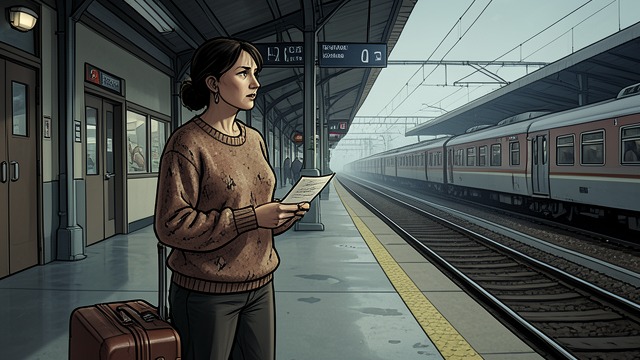
Persephone asks to attend Chivers Boarding School, seeking distance from her family and a chance to build a life of her own. She hopes Callum will leave with her, but he misses her letter and she departs believing he has chosen not to come.
At Chivers, she stops drinking, applies herself to school, makes friends, and joins a group committed to integration. For the first time, she turns distress into sustained work toward a future instead of treating escape as a temporary refuge.
Choosing the Child
Choosing the Child
Pressure from the family
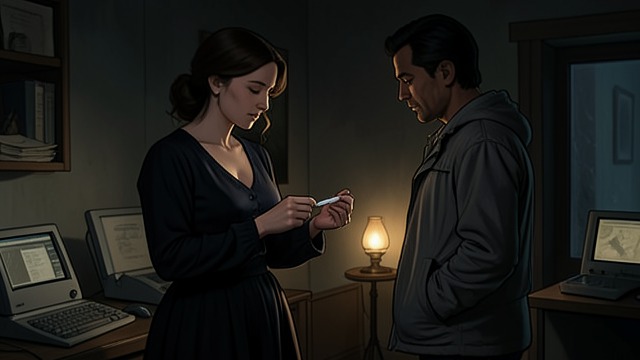
When Persephone’s pregnancy becomes known, Kamal Hadley and Jasmine Hadley urge her to have an abortion and frame the decision as a way to end a scandal. Kamal assumes the pregnancy resulted from rape, refusing to accept Persephone’s account that she and Callum made love willingly.
Persephone sees that her family’s concern is bound up with reputation and control. She insists that the decision belongs to her, despite being frightened, isolated, and aware that the public will judge her relationship with a Nought.
An independent decision
Persephone chooses to continue the pregnancy. The decision is not a simple victory: Callum is imprisoned, her family rejects her, and she has no guarantee of security or support.
Her choice nonetheless marks a decisive change. Rather than let her father define her experience or dictate her future, she claims responsibility for her child and for the truth of her relationship with Callum.
A Future Without Callum
A Future Without Callum
Speaking against the story
After Callum is convicted, Persephone publicly disputes the claim that he raped her and tries to correct a narrative that turns her into a passive victim. Her testimony cannot secure his release, and the state blocks her efforts to reach him before his execution.
She must live with the knowledge that truth alone cannot overcome a legal system determined to punish Callum. His death leaves her to carry their child without the person she loves and without the future they had briefly imagined.
Keeping the connection
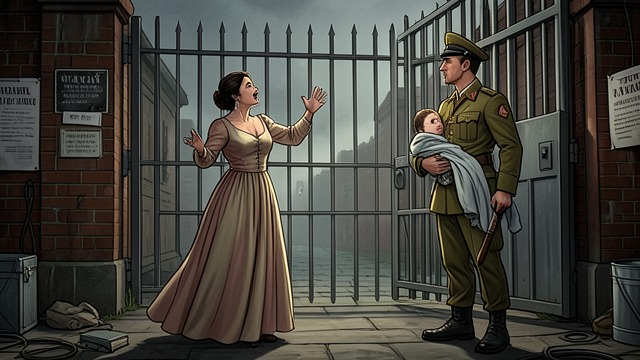
At the execution, Persephone calls out that she loves Callum and that their child will love him too. The birth announcement later names the baby Callie Rose and states that the child will take her father’s surname.
The announcement cannot reverse the loss, but it preserves Callum’s place in his daughter’s life. Persephone’s future becomes an act of remembrance as well as survival.
At the beginning of the story, before Callum’s first school day
During the first months of the school year
After Callum’s father dies and before Persephone leaves for Chivers
After Persephone returns from Chivers and learns she is pregnant
From Callum’s imprisonment through the birth announcement
